

 Sold out




 Sold out
 Sold out

 Sold out


 Sold out
 Sold out
 Sold out
 Sold out
 Sold out


What Makes a Grinder Suitable for Espresso?
Espresso requires a much finer and more precise grind than filter coffee. Small changes in grind size can have a noticeable effect on how quickly the espresso flows and how it tastes. A suitable espresso grinder must therefore offer fine adjustment, consistent particle size and enough control to match different coffees, doses and espresso machines.
The grinders in this collection have been selected because they offer one or more of the following:
- Fine, consistent grinding: Espresso requires an even fine grind to create the resistance needed for water to pass through the coffee at the correct rate.
- Precise grind adjustment: Small stepped adjustments or stepless controls make it easier to fine-tune extraction time and flavour.
- Low grind retention: Reduced retention helps keep doses more accurate and limits stale coffee remaining inside the grinder.
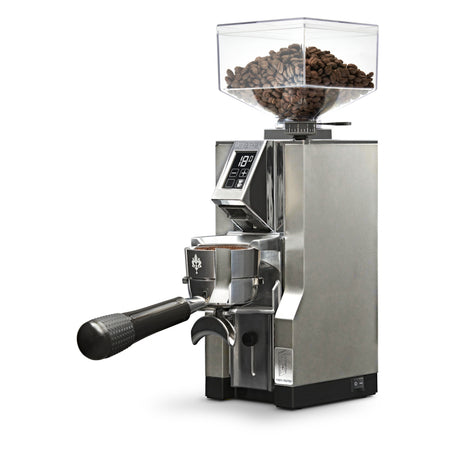
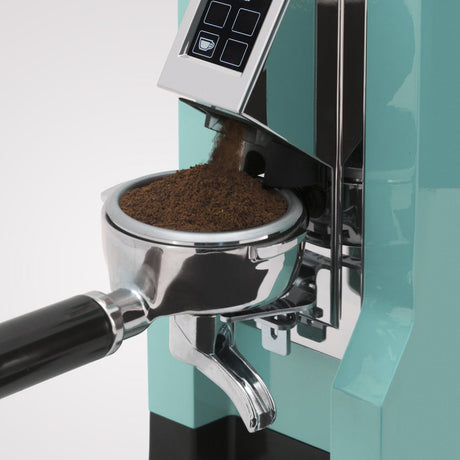
- Espresso-friendly dosing: Many models grind directly into a portafilter or include dosing cups designed for espresso preparation.
- Suitable burr design: Burr size, shape and alignment help provide the consistency required for balanced espresso extraction.
- Reliable repeatability: A good espresso grinder should produce similar results each time once the grind setting and dose have been established.

Dedicated Espresso Grinders and All-Purpose Grinders
Some models in this collection are designed primarily for espresso. These grinders normally offer stepless adjustment or very small stepped changes, allowing the grind to be altered gradually as the coffee ages or when switching between different beans.
We have also included selected all-purpose grinders that perform well for both espresso and filter coffee. These models offer sufficient precision at their finer settings while retaining a wider grind range for other brewing methods. Where a grinder is better suited to occasional espresso than regular use, this is made clear in the product description.

Stepped or Stepless Grind Adjustment?
Stepped grinders move between fixed grind settings. They are easy to use and make it simple to return to a previous setting. Models designed for espresso use much smaller steps than general-purpose coffee grinders.
Stepless grinders allow very small adjustments without fixed positions. This gives greater control when dialling in espresso and is popular with customers who regularly change coffee or want to fine-tune extraction closely.
Choosing the Right Espresso Grinder
For occasional espresso or machines using pressurised filter baskets, an entry-level espresso-capable grinder may be sufficient. For traditional unpressurised baskets, a grinder with finer adjustment and greater consistency will make it much easier to control shot time and flavour.
Timed grinders are convenient when preparing several coffees each day, while grind-by-weight models provide more accurate automatic dosing. Single-dose grinders are ideal for customers who frequently change beans, use different brewing methods or prefer to weigh each dose individually.
Manual espresso grinders can provide excellent grind quality at a lower price and are well suited to customers preparing one or two coffees at a time. Electric grinders offer greater speed and convenience for regular use.
Frequently Asked Questions
What makes a coffee grinder suitable for espresso?
What makes a coffee grinder suitable for espresso?
An espresso grinder must be able to grind coffee very finely and provide enough adjustment to control how quickly the espresso flows. Small changes in grind size can significantly affect extraction, so an espresso grinder needs much finer control than a basic filter coffee grinder. Consistent grinding also helps produce more repeatable results from one shot to the next.
Can any coffee grinder be used for espresso?
Can any coffee grinder be used for espresso?
No. Some general-purpose grinders can produce a fine-looking grind but do not offer enough precision to dial in espresso accurately. For traditional espresso machines with non-pressurised baskets, choose a grinder specifically designed for espresso or an all-purpose model with a high-resolution espresso adjustment range.
Machines using pressurised or dual-wall baskets are more forgiving and may work with a less specialised grinder.
Why is a burr grinder better than a blade grinder for espresso?
Why is a burr grinder better than a blade grinder for espresso?
A burr grinder crushes the coffee between two burrs at a controlled setting, producing a more consistent grind. A blade grinder chops the beans unevenly and does not provide accurate grind-size adjustment. This makes it difficult to control espresso flow and achieve repeatable extraction.
Should I choose a stepped or stepless espresso grinder?
Should I choose a stepped or stepless espresso grinder?
A stepped grinder has fixed adjustment positions, making it easy to use and return to a previous setting. For espresso, the steps need to be sufficiently small to provide accurate control.
A stepless grinder allows very small changes between settings and provides greater freedom when dialling in different coffees. It is particularly useful for customers who frequently adjust their espresso recipe or change beans.
Are flat or conical burrs better for espresso?
Are flat or conical burrs better for espresso?
Both flat and conical burr grinders can produce excellent espresso. Burr shape is only one part of the grinder’s overall design, alongside burr quality, alignment, motor performance and grind adjustment.
Conical burr grinders are commonly found in compact and affordable home models. Flat burrs are often used in larger or more advanced grinders and may provide a different flavour profile. Neither type is automatically better for every customer.
Can I use one grinder for both espresso and filter coffee?
Can I use one grinder for both espresso and filter coffee?
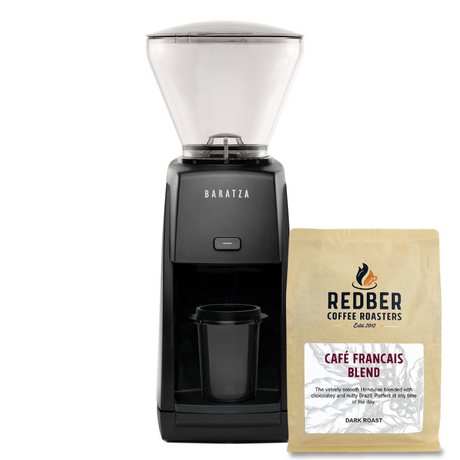
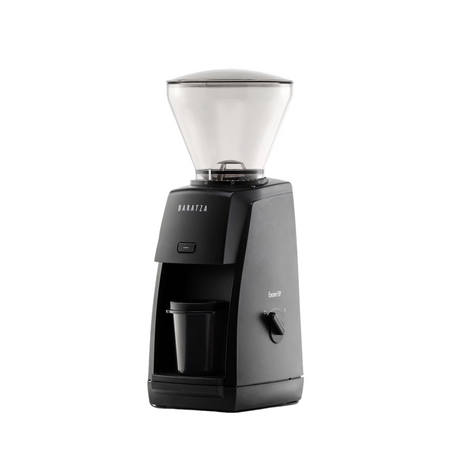
Yes, provided the grinder has a sufficiently wide grind range and enough precision at its finer settings. Models such as the Baratza Encore ESP are specifically divided into higher-resolution espresso settings and coarser settings for filter coffee. Other all-purpose models use stepless adjustment and burrs designed for both espresso and filter brewing.
However, changing frequently between very fine espresso settings and coarser filter settings can require some adjustment and purging. Customers who regularly make both may prefer a grinder designed for easy switching or separate grinders for each brewing method.
What is a single-dose espresso grinder?
What is a single-dose espresso grinder?
A single-dose grinder is designed for weighing out only the coffee needed for each drink rather than keeping beans in a large hopper. This makes it easier to change between coffees, keep track of each dose and leave fewer beans exposed in the grinder.
Single-dose models commonly include features intended to reduce coffee retention, such as shorter grind paths, bellows or anti-retention systems.
What does low retention mean?
What does low retention mean?
Grind retention is the amount of ground coffee that remains inside the grinder instead of reaching the portafilter or dosing cup. Lower retention means less old coffee is mixed into the next dose and less coffee may need to be purged after changing the grind setting or switching beans.
Is timed or grind-by-weight dosing better?
Is timed or grind-by-weight dosing better?
Timed grinders run for a programmed number of seconds and can provide convenient, repeatable dosing once correctly set up. The actual weight may still vary slightly as the coffee, grind setting and hopper level change.
Grind-by-weight grinders measure the coffee as it is ground and stop when the selected weight is reached. They usually provide more accurate automatic dosing but tend to cost more. Eureka states that its grind-by-weight systems are designed to improve dose consistency and reduce coffee waste.
Do I need an espresso grinder with a pressurised filter basket?
Do I need an espresso grinder with a pressurised filter basket?
A pressurised or dual-wall basket is more forgiving because the basket helps create resistance during extraction. You can often use it successfully with an entry-level espresso-capable grinder.
A traditional non-pressurised or single-wall basket relies much more heavily on the coffee’s grind size, dose and preparation. For this type of basket, a precise espresso grinder is strongly recommended.
Why does my espresso grinder need regular adjustment?
Why does my espresso grinder need regular adjustment?
Coffee changes gradually after roasting and can behave differently as it ages. Changes in the beans, dose, humidity and grinder temperature may also affect how quickly the espresso flows. Adjusting the grinder slightly finer or coarser helps maintain the desired extraction time and flavour.
How fine should I grind coffee for espresso?
How fine should I grind coffee for espresso?
Espresso normally requires a fine grind, but there is no single setting that works for every coffee and machine. Start with the manufacturer’s recommended espresso range, then adjust according to the flow of the shot.
If the espresso runs too quickly and tastes weak or sharp, adjust the grinder finer. If it runs very slowly or tastes overly bitter and heavy, adjust it slightly coarser. Make small changes and keep the coffee dose consistent while dialling in.
Are manual espresso grinders as good as electric grinders?
Are manual espresso grinders as good as electric grinders?
A good manual espresso grinder can provide excellent grind consistency and precise adjustment, often at a lower price than an electric model with comparable burr quality. It can be a good choice for customers making one or two drinks at a time.
An electric grinder is faster and more convenient for frequent use, preparing several drinks or grinding directly into a portafilter.
